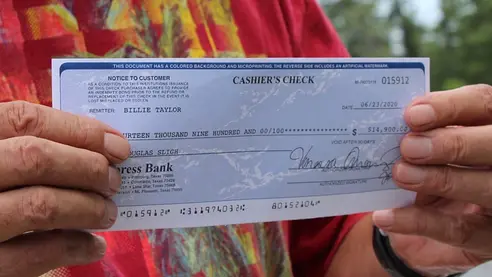
A check held up for the camera can make a headline like this sound official: “Seniors Born 1939–1969 Receive 11 Benefits This Month If They Ask.” But there is an important detail to understand before anyone starts making calls or sharing personal information.
There is no single federal program that automatically gives everyone born between 1939 and 1969 eleven new benefits simply because they ask for them. Eligibility for Social Security, Medicare assistance, and other programs generally depends on factors such as age, work history, income, resources, disability status, household circumstances, and where someone lives.
Still, there are legitimate programs and cost-saving opportunities that older Americans may want to check. Some require an application, while others may happen automatically for people who meet specific requirements.
Here are 11 worth knowing about in 2026.
1. Social Security Retirement Benefits
Social Security retirement benefits are based primarily on a person’s covered earnings and when they choose to claim benefits.
The Social Security Administration provides personalized estimates through a person’s online account, allowing workers and beneficiaries to review their earnings record and estimated benefits. (Social Security Administration)
Being born in a particular year does not, by itself, guarantee a particular payment amount.
If you’re approaching retirement or already eligible, checking your official Social Security record can help you understand what you’re actually entitled to.
2. 2026 Social Security COLA Increase
Social Security beneficiaries received a 2.8% cost-of-living adjustment (COLA) for 2026. The increase began with benefits received in January 2026, while SSI increases began with the December 31, 2025 payment. (Social Security Administration)
This isn’t a special payment that people need to request.
If someone contacts you claiming they can “activate” your COLA increase for a fee, that’s a major warning sign. The SSA specifically warns that scammers may claim they need personal information or payment to activate a COLA or benefit increase. (Social Security Administration)
3. Medicare Savings Programs
Some Medicare beneficiaries with limited income and resources may qualify for programs that help pay certain Medicare costs.
For example, the Specified Low-Income Medicare Beneficiary (SLMB) program can help eligible people pay their Medicare Part B premiums. The Qualifying Individual (QI) program can also help with Part B premiums for people who meet its requirements. (Medicare)
Eligibility limits vary, and state rules can affect qualification.
This is one reason simply asking whether you “qualify for senior benefits” isn’t enough. The specific program matters.
4. Medicare Extra Help
Prescription costs can be a significant expense for older adults, particularly those taking several medications.
Medicare’s Extra Help program assists qualifying people with limited income and resources with Medicare Part D prescription-drug costs. It can help with premiums, deductibles, coinsurance, and other drug costs. (Medicare)
For 2026, Medicare lists income and resource limits for individuals and married couples, although special circumstances and state rules can affect eligibility. (Medicare)
Some people qualify automatically, while others need to apply.
5. Medicaid Assistance
Medicaid is another potential source of assistance for people who meet income, resource, and other eligibility requirements.
For some seniors, Medicaid can work alongside Medicare and help with health-care expenses that Medicare doesn’t fully cover.
Because Medicaid eligibility is administered through states, the rules aren’t identical everywhere. Someone who doesn’t qualify under one set of circumstances shouldn’t automatically assume that every form of assistance is unavailable.
6. Supplemental Security Income
Supplemental Security Income, commonly called SSI, provides payments to certain people with limited income and resources who meet federal eligibility requirements.
SSI is separate from Social Security retirement benefits, even though the programs are both administered by the Social Security Administration.
Therefore, someone receiving Social Security shouldn’t automatically assume that they qualify for SSI—or that receiving one program automatically means receiving the other.
7. Spousal Benefits
A person’s Social Security situation isn’t always limited to their own work record.
Eligible spouses may be able to receive benefits based on a spouse’s work record, subject to Social Security’s rules.
This can be particularly relevant for married couples where one spouse had substantially lower lifetime earnings than the other.
The exact amount depends on the circumstances, including age and claiming decisions, so it’s worth checking the official estimate rather than relying on a viral post or social-media calculator.
8. Survivor Benefits
The Social Security system also provides survivor benefits in certain circumstances.
A surviving spouse, child, or other qualifying family member may potentially receive benefits based on the earnings record of a deceased worker.
These benefits have specific eligibility rules, and they aren’t automatically available to every surviving family member.
If your family situation has changed because of a death, contacting Social Security directly can help determine whether a benefit application is appropriate.
9. State Property-Tax Relief
Homeowners shouldn’t overlook state and local programs.
Depending on where someone lives, there may be property-tax exemptions, credits, freezes, deferrals, or other programs designed for older homeowners or people with limited incomes.
These aren’t federal benefits and therefore can’t be described as one nationwide “senior payment.”
The requirements can vary dramatically between states and even between local jurisdictions.
That’s why seniors should check their state’s official government website or local tax assessor rather than responding to a random online advertisement.
10. Food and Utility Assistance
Older adults with limited income may also qualify for assistance with everyday expenses.
Depending on circumstances and location, programs can include food assistance or help with heating and cooling costs.
These programs generally have their own eligibility requirements based on factors such as household income, household size, expenses, and location.
The important takeaway is that being a senior can be relevant to eligibility, but age alone doesn’t guarantee assistance.
11. Free Help Finding Benefits
Perhaps the most useful “benefit” is knowing where to check for legitimate programs.
Medicare recommends using official resources and state assistance programs when investigating ways to reduce health-care and prescription costs. People who need help with Medicare can also use their State Health Insurance Assistance Program (SHIP). (Medicare)
Similarly, a personal my Social Security account can provide access to information about Social Security benefits and earnings records. (Social Security Administration)
This is much safer than giving your Social Security number or banking information to someone who contacts you unexpectedly.
Does Being Born Between 1939 and 1969 Automatically Qualify You?
No.
The birth-year range in the headline should not be interpreted as an official eligibility rule for 11 new benefits.
Someone born in 1939 and someone born in 1969 can have completely different eligibility because they’re at very different ages and may have different income, assets, work histories, Medicare status, marital circumstances, and state residency.
The better question is:
“Which programs do I personally qualify for?”
That’s something that can be answered by checking official records and applying for programs where appropriate.
Be Careful With “Claim Your Check” Advertisements
The image associated with this type of headline shows someone holding what appears to be a large check. But an image of a check is not proof that every senior is receiving that amount.
This distinction matters.
The Social Security Administration warns that scammers impersonate government agencies through phone calls, texts, emails, websites, letters, and social media. Some use official-looking documents, employee names, logos, or other material to appear legitimate. (Social Security Administration)
The agency also warns that government impersonators may pressure people to act quickly or demand unusual forms of payment.
A particularly important warning appeared in September 2026: scammers have been telling Social Security beneficiaries that their money is in danger and instructing them to transfer it to another account. The SSA says legitimate government agencies will not tell you to move your money to “protect” it. (SSA Office of the Inspector General)
Never provide these details to an unexpected caller
Be extremely cautious if someone suddenly asks for:
- Your Social Security number
- Bank account information
- Debit or credit card information
- Online banking passwords
- Medicare information
- A payment to “release” your benefits
- Gift cards or cryptocurrency
- A wire transfer
- Cash
- A QR-code payment
The SSA says it will not demand immediate payment or ask for payment through gift cards, cryptocurrency, wire transfers, cash, or similar methods. (Social Security Administration)
The Bottom Line
The headline “Seniors Born 1939–1969 Receive 11 Benefits This Month If They Ask” makes a broad promise that isn’t supported by a single federal benefits program.
But there are legitimate programs worth investigating.
Social Security retirement and survivor benefits, Medicare Savings Programs, Medicare Extra Help, SSI, Medicaid, state tax programs, food assistance, utility assistance, and other resources can potentially reduce expenses for eligible older adults.
The key is to verify eligibility through official sources rather than assuming a viral headline applies to everyone.
And if a message says you have to pay money, provide sensitive information immediately, or move your savings to receive or protect a government benefit, stop and verify it independently. Current SSA guidance specifically warns that these are common tactics used in government-impersonation scams. (Social Security Administration)