You’ve followed the recipe. You’ve added seasoning. You’ve watched the pan carefully.
And yet your chicken still comes out dry, tough, or strangely bland.
The problem may be much simpler than you think:
You’re cooking chicken straight from the refrigerator without letting the surface dry properly.
Moisture on the outside of the chicken can interfere with browning. Instead of quickly developing a flavorful golden crust, the meat can release water into the pan and begin steaming.
Here’s how to fix it—and a few other simple habits that can dramatically improve your chicken.
Start by Drying the Chicken
Before seasoning, pat the surface of the chicken thoroughly with paper towels.
You don’t need to leave raw chicken sitting around at room temperature for an extended period. Simply removing excess surface moisture immediately before cooking can help the exterior brown more effectively.
This is especially useful when pan-searing chicken breasts or thighs.
Don’t Crowd the Pan
Even perfectly dried chicken can struggle to brown if the pan is overloaded.
When too many pieces are packed together, moisture released during cooking can accumulate. Instead of getting the high heat needed for browning, the chicken may steam.
Give each piece some space.
If you’re cooking a large batch, use a larger pan or work in batches.
Your Pan Needs to Be Hot Enough
A cold pan can lead to pale, uneven chicken.
Preheat the pan before adding your cooking fat and chicken. You want enough heat to begin browning the exterior without immediately burning the outside.
Once the chicken is in the pan, resist the urge to constantly move it around.
Let one side develop color before turning it.
Stop Flipping It Every 20 Seconds
Constantly moving chicken around makes it harder to develop a good crust.
Place the chicken in the pan and give it time to brown.
When it releases more easily from the pan and has developed a golden surface, turn it over.
The exact cooking time depends on the thickness and cut of the chicken, so use temperature rather than appearance alone to determine when it’s safely cooked.
Don’t Guess When It’s Done
Chicken can look finished on the outside while still needing more cooking in the center.
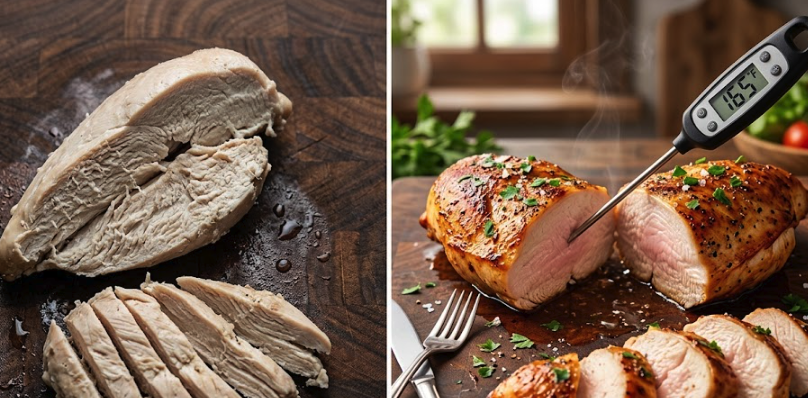
The safest approach is to use an instant-read food thermometer and check the thickest part of the meat.
For poultry, the USDA recommends a minimum internal temperature of 165°F (74°C).
That gives you a much more reliable answer than cutting into the chicken repeatedly and watching the juices.
The Thickness Matters More Than You Think
A thick chicken breast can create a frustrating situation: the outside becomes overcooked before the center reaches the desired temperature.
For more even cooking, consider pounding very thick breasts to a more uniform thickness before cooking.
This helps the meat cook at a more consistent rate.
Season More Intentionally
Chicken has a relatively mild flavor, so seasoning matters.
Salt the meat evenly rather than concentrating seasoning in a few spots.
You can also build flavor with black pepper, garlic, paprika, herbs, spices, or a marinade depending on the recipe.
For thicker pieces, seasoning ahead of time can help the salt penetrate more evenly.
Let It Rest
You’ve finally cooked the chicken perfectly.
Don’t immediately slice it open.
Letting cooked chicken rest briefly gives the juices time to redistribute. Cutting into it immediately can cause more moisture to escape onto the cutting board.
A short rest can make the finished chicken feel noticeably juicier.
What About Marinades?
Marinades can add flavor and help with tenderness depending on their ingredients, but they aren’t a substitute for proper cooking technique.
If the chicken is dripping wet when it goes into a hot skillet, excess moisture can still interfere with browning.
For a better sear, remove excess marinade from the surface before cooking.
The Simple Chicken Formula
For consistently better chicken, remember this sequence:
Dry → Season → Preheat → Don’t Crowd → Brown → Check Temperature → Rest
It sounds almost too simple, but these steps address many of the problems that turn chicken into a dry, pale, disappointing dinner.
The Bottom Line
Great chicken isn’t necessarily about buying better ingredients or using a complicated recipe.
Small details make a huge difference.
Dry the surface, give the pieces enough space, use a properly heated pan, avoid excessive flipping, and use a thermometer to confirm doneness.
Most importantly, don’t keep cooking the chicken simply because you’re afraid it isn’t done. Once it reaches a safe internal temperature, take it off the heat and let it rest.
That combination can turn an ordinary chicken dinner into something much more tender, juicy, and flavorful.