Imagine opening your electricity bill and seeing the total drop by 90%.
For many households, that would mean hundreds of dollars—or thousands of rupees—staying in their bank account every year.
That’s exactly why headlines promising a “simple trick” to slash your electricity bill attract so much attention.
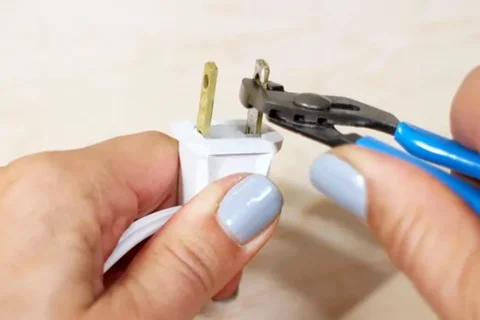
The image accompanying this claim shows someone holding an electrical plug while using pliers near its metal pins. It looks like a quick household hack, and the dramatic headline makes it sound as though one tiny adjustment could transform your energy costs overnight.
But there’s an important problem:
There is no universal electrical-plug trick that can safely reduce a household’s electricity bill by 90%.
In fact, modifying a plug or electrical connection can create a serious shock, fire, or equipment-damage hazard.
So what can homeowners actually do to reduce their electricity consumption—and where does the 90% claim come from?
The Image Makes The Trick Look Easy
The photograph shows a person’s hands holding what appears to be a power plug while using pliers near the plug’s metal contacts.
At first glance, it looks simple.
No complicated tools.
No expensive equipment.
No electrician apparently required.
That’s part of the appeal of viral household hacks.
They often make a difficult problem appear to have an incredibly easy solution.
But electricity is one area where a “quick fix” can be particularly risky.
A plug is designed with specific electrical and mechanical characteristics. Changing the shape, position, or connection of its components can affect how safely electricity flows through the device.
A modification that looks harmless could potentially create overheating, arcing, poor contact, or other dangerous conditions.
Can One Trick Really Cut A Bill By 90%?
For most households, no.
Your electricity bill generally reflects how much electrical energy your household consumes, along with factors such as the applicable tariff, taxes, fees, and other charges.
If a household wants to reduce its bill dramatically, it generally needs to reduce a substantial amount of electricity consumption—or benefit from a major change in the electricity rate or another billing factor.
Simply changing a plug doesn’t make appliances magically consume 90% less electricity.
A refrigerator still needs energy to operate.
An air conditioner still needs energy to cool a room.
A water heater still needs energy to heat water.
A washing machine still requires energy to run its motor and heating functions where applicable.
The plug is primarily the connection between the appliance and the electrical supply. It isn’t a magic device that determines how much energy the appliance needs.
Why These Claims Become Viral
The promise is incredibly attractive.
Think about the difference between these two headlines:
“Five Ways To Gradually Reduce Household Energy Consumption”
and:
“1 Simple Trick To Cut Your Electrical Bill By 90%.”
The first sounds reasonable.
The second creates an immediate emotional reaction.
People want to know the trick.
They imagine opening their next bill and seeing an enormous reduction.
That’s exactly what makes extreme savings claims so effective as clickbait.
But whenever a claim promises an enormous financial benefit from almost no effort, it’s worth asking a simple question:
Where is the evidence?
The Real Cost Of Modifying Electrical Equipment
The photograph is particularly concerning because it depicts someone apparently working directly on a plug.
Electrical components aren’t ordinary household objects.
A poorly modified plug can potentially result in:
- Electric shock
- Short circuits
- Electrical arcing
- Overheating
- Damage to the appliance
- Damage to the outlet
- Fire hazards
The exact risks depend on the electrical system, equipment, modification, and circumstances.
That’s why homeowners shouldn’t copy a viral image by bending, cutting, removing, or otherwise modifying electrical contacts.
If a plug is damaged, loose, cracked, unusually hot, or showing signs of burning, replacing it with a properly rated component or having it inspected by a qualified electrician is a much safer approach.
What About Appliances That Consume Power While Turned Off?
There is a real concept behind some energy-saving advice that can sometimes be confused with viral plug hacks: standby power.
Many electronic devices continue drawing a small amount of electricity when they appear to be switched off.
Examples can include certain televisions, game consoles, chargers, computers, speakers, streaming devices, and other electronics.
Individually, the consumption may be relatively small.
But a household with many devices operating in standby mode can accumulate additional electricity use over time.
That doesn’t mean eliminating standby power will reduce everyone’s bill by 90%.
But reducing unnecessary consumption can contribute to lower energy use.
The Biggest Savings Usually Come From Big Energy Users
If someone genuinely wants to reduce an electricity bill, it’s generally more useful to look at the appliances responsible for the largest amount of consumption.
Depending on the household, major contributors can include:
Air Conditioning
Cooling can consume substantial electricity, particularly when an air conditioner operates for many hours every day.
Using an appropriate temperature setting, maintaining filters, keeping doors and windows closed while cooling, and ensuring the system is properly maintained can help reduce unnecessary energy use.
Water Heating
Water heaters can also consume significant energy.
Reducing unnecessary heating, improving insulation where appropriate, and using efficient equipment can make a meaningful difference.
Refrigeration
Refrigerators operate continuously.
Keeping the door closed as much as practical, maintaining appropriate temperatures, checking door seals, and replacing very inefficient older equipment when economically justified can help.
Lighting
Modern LED lighting generally uses substantially less electricity than older incandescent lighting for comparable illumination.
Replacing inefficient bulbs can therefore be a straightforward efficiency improvement.
Don’t Forget Heating And Cooling Habits
Sometimes the easiest savings don’t involve buying anything at all.
Small behavioral changes can add up.
For example, leaving an empty room brightly lit for hours wastes electricity.
Running an air conditioner while doors and windows are open wastes cooling energy.
Running appliances when they aren’t needed increases consumption without providing any benefit.
Likewise, using a very inefficient appliance for many more hours than necessary can have a much larger effect on the bill than anything involving a plug.
The key is to focus on energy actually being consumed, rather than searching for a secret modification.
Check Your Electricity Bill Before Trying A “Hack”
Your bill itself can provide useful clues.
Look for the amount of electricity consumed during the billing period, usually expressed in kilowatt-hours (kWh) or units.
Then compare it with previous bills.
If consumption has suddenly increased, ask what changed.
Did you start using an air conditioner more often?
Did someone begin working from home?
Has the weather changed?
Are additional appliances being used?
Did the household size change?
Is there a potentially faulty appliance?
This approach can help identify the real source of increased consumption.
A Smart Meter Can Tell You Even More
If your electricity provider offers detailed usage information through a smart meter or customer portal, that data can be extremely useful.
Instead of guessing which appliance is responsible for high consumption, you may be able to examine patterns over different days or times.
For example, unusually high overnight consumption could prompt an investigation into appliances that remain active continuously.
Large spikes during hot afternoons might coincide with air-conditioning use.
Understanding the pattern is often much more useful than following an anonymous internet hack.
What About Power Strips?
Power strips can be useful for organizing electronics and, in appropriate circumstances, making it easier to disconnect multiple devices.
Some advanced power strips are designed to reduce standby consumption by automatically disconnecting selected devices.
But again, expectations matter.
They aren’t going to transform a typical electricity bill by 90%.
Their value depends on what equipment is connected, how much standby power those devices consume, and how consistently unnecessary equipment is disconnected.
A small saving is still a saving—but it shouldn’t be confused with a massive reduction.
The 90% Number Should Make You Pause
Whenever an advertisement, video, or article promises an enormous percentage reduction, look carefully at what is actually being measured.
Is it:
- 90% less electricity?
- 90% less standby power?
- 90% less consumption from one appliance?
- A temporary reduction?
- A theoretical maximum?
- Or simply an unsupported marketing claim?
Those are completely different things.
A household cannot reasonably assume that a technique reducing consumption for one small device will reduce the entire electricity bill by the same percentage.
The total bill depends on the consumption of all relevant loads and the applicable billing structure.
Never Copy The Plug Modification In The Picture
This is perhaps the most important takeaway from the image.
The photograph shows someone apparently using pliers around an electrical plug.
That does not make modifying a plug a safe energy-saving technique.
Electrical connectors are engineered with specific dimensions and safety characteristics. Altering them can create an unreliable connection or expose conductive parts.
If an electrical plug doesn’t fit an outlet, don’t force it and don’t reshape the plug to make it fit.
Use the correct, compatible equipment or consult a qualified electrician.
Likewise, if a plug is damaged, replacing it properly is safer than improvising a repair.
A Better “Simple Trick”
If you want one genuinely useful principle, it’s this:
Find the appliances using the most electricity and reduce unnecessary runtime.
That’s far more meaningful than modifying a plug.
Start with heating and cooling equipment.
Then examine water heating, refrigeration, laundry, cooking appliances, and electronics.
Look for equipment that runs unnecessarily.
Replace inefficient lighting with efficient alternatives where appropriate.
Maintain appliances according to the manufacturer’s recommendations.
And compare your electricity consumption over time.
These steps may not sound as exciting as a secret 90% trick.
But they are based on how electricity consumption actually works.
The Bottom Line
The photograph may make the electrical hack look quick and harmless, but there is no universal plug modification that can safely cut a household electricity bill by 90%.
Don’t bend, cut, remove, or otherwise alter electrical plug components in an attempt to save money.
Instead, focus on the things that genuinely influence electricity consumption: appliance efficiency, operating time, heating and cooling habits, standby consumption, lighting, water heating, and overall household usage.
The biggest savings generally come from understanding where your electricity is going—not from a mysterious trick performed with a pair of pliers.
And when it comes to household electricity, there’s one rule worth remembering:
A slightly higher electricity bill is a problem you can solve. An electrical fire is a problem you never want to create.