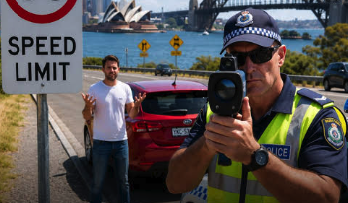
Most drivers think they know the basic rules of the road: stop at red lights, obey speed limits, wear a seat belt, and never drive under the influence.
But traffic laws go much deeper than those familiar rules.
Something that seems completely normal in one state can lead to a ticket—or even a more serious penalty—in another. Some laws cover surprisingly ordinary behaviors, including how you use your phone, where you park, what you do at an intersection, and even how you interact with other drivers.
Here are seven common driving habits that can be illegal in certain U.S. states.
1. Holding Your Phone While Driving
This is one of the biggest areas where driving laws have changed in recent years.
Many states have adopted laws restricting or prohibiting the use of handheld mobile phones while driving. In some places, simply holding your phone while operating a vehicle can be enough to result in a citation, even if you’re not actively texting.
That means habits such as these can potentially create problems:
- Holding your phone to talk
- Checking a notification
- Scrolling through an app
- Typing a message
- Holding the phone while using navigation
- Recording a video while driving
Hands-free systems are generally treated differently, but the exact rules vary by state.
A driver who thinks, “I’m not texting, so I’m fine,” may not realize that their state’s law is broader than a texting ban.
The safer habit
Set up navigation before you start driving, use a hands-free system when permitted, and avoid handling your phone while the vehicle is moving.
2. Driving With Your Interior Lights On
You’ve probably heard someone say that it’s illegal to drive with the interior light on at night.
The reality is more complicated.
In many jurisdictions, there isn’t a simple nationwide rule making it automatically illegal. However, an interior light can create glare or reduce visibility, potentially making driving more difficult.
If an officer believes your lighting or visibility is creating a safety issue, other traffic laws may become relevant.
So while turning on a dome light isn’t automatically a ticket everywhere, it’s still a good idea to avoid unnecessary interior lighting while driving at night.
Why the myth continues
This rule is often passed down by parents to children as an absolute law. In reality, traffic regulations differ by jurisdiction, and the safety concern is usually more important than the light itself.
3. Making a U-Turn Whenever You Want
A U-turn can look like a simple maneuver, but it isn’t legal everywhere under all circumstances.
State and local laws may restrict U-turns based on factors such as:
- Intersections
- Visibility
- Divided highways
- Traffic signals
- Posted signs
- Curves or hills
- Business districts
- Local municipal rules
Even if you don’t see a “No U-Turn” sign, that doesn’t necessarily mean the maneuver is legal.
A driver may also be required to make sure the turn can be completed safely without interfering with approaching traffic.
Before making a U-turn
Look for posted restrictions and check your state’s rules. When in doubt, continuing to a legal location to turn around is usually simpler than risking a citation.
4. Driving Too Slowly
Speeding gets most of the attention, but driving unusually slowly can also create legal problems.
Many drivers assume that staying below the speed limit is always safe from a ticket. That’s not necessarily true.
Traffic laws in various states prohibit driving at a speed that unnecessarily blocks or impedes the normal movement of traffic.
For example, imagine a highway with a posted speed limit of 65 mph. A driver traveling dramatically slower than surrounding traffic without a reasonable reason could potentially create a dangerous situation.
The issue isn’t simply whether the driver is below the posted limit.
When slower driving makes sense
There are plenty of legitimate reasons to reduce speed:
- Heavy rain
- Snow or ice
- Fog
- Road construction
- Mechanical problems
- Traffic congestion
- Poor visibility
- Emergency situations
The key is that drivers are generally expected to operate at a speed appropriate for the circumstances while avoiding unnecessarily obstructing traffic.
5. Parking Too Close to a Crosswalk or Intersection
That quick parking spot might not actually be legal.
Many states and cities restrict parking near intersections, crosswalks, fire hydrants, stop signs, driveways, and other locations where a parked vehicle can interfere with visibility or access.
The exact distance requirements can differ considerably.
For example, a driver might think:
“I’m not blocking the crosswalk, so I’m good.”
But the vehicle could still be too close to an intersection under local law.
Parking restrictions exist partly because parked vehicles can make it harder for pedestrians, cyclists, and drivers to see one another.
Don’t rely only on the curb
Look for:
- No-parking signs
- Painted curbs
- Meter restrictions
- Street signs
- Temporary restrictions
- Local parking rules
If you’re visiting another state or city, don’t assume the parking rules are identical to those where you live.
6. Using Your Horn for the Wrong Reason
A car horn isn’t simply a tool for expressing frustration.
In some jurisdictions, laws restrict horn use to situations where it’s reasonably necessary for safety or to warn another road user.
That means repeatedly leaning on the horn because the driver ahead hasn’t moved quickly enough could potentially violate local regulations.
The same applies to using a horn aggressively in situations where there’s no legitimate safety reason.
What the horn is actually for
Think of the horn primarily as a warning device.
For example, it can be appropriate when:
- Another vehicle is drifting into your lane
- A pedestrian isn’t aware you’re approaching
- A vehicle is backing toward you
- You need to alert another road user to an immediate hazard
Rules vary by jurisdiction, but using the horn as a substitute for patience isn’t a good habit.
7. Driving With Objects Blocking Your View
This one can be surprisingly easy to overlook.
A driver may put something on the dashboard, hang an accessory from the windshield, stack items near the windshield, or place a large object inside the vehicle.
Depending on state law and the location of the obstruction, this can potentially violate rules concerning windshield visibility.
Examples might include:
- Large dashboard decorations
- Objects hanging from the rearview mirror
- Stickers placed in restricted areas
- Oversized GPS mounts
- Paperwork covering part of the windshield
- Cargo positioned where it blocks the driver’s view
Some states have very specific rules about what can be placed on or near the windshield.
Why it matters
A small obstruction may not seem important from the driver’s seat. But at the wrong moment, even a limited reduction in visibility can hide a pedestrian, cyclist, traffic signal, or road hazard.
Why Driving Laws Differ From State to State
The United States doesn’t have one single traffic code covering every driving situation.
States establish their own vehicle and traffic laws, while cities and municipalities may also have additional regulations.
That’s why a driving habit that seems completely ordinary in one location can be restricted somewhere else.
The differences can involve:
- Cell phone use
- Parking
- U-turns
- Vehicle equipment
- Horn use
- Window tint
- Lane usage
- Passing rules
- School zones
- Emergency vehicles
Local signs can also create additional restrictions.
Don’t Rely on Driving Myths
Some of the most persistent driving “rules” aren’t actually laws.
You’ve probably heard claims such as:
- “It’s illegal to drive barefoot.”
- “It’s illegal to drive with the interior light on.”
- “You can always turn right on red.”
- “Going below the speed limit can never get you a ticket.”
- “If there isn’t a sign, the maneuver must be legal.”
The truth depends on the specific state and sometimes the local jurisdiction.
That’s why it’s better to check the actual traffic code rather than relying on something a friend, relative, or social-media post told you years ago.
What to Do When Driving in Another State
If you’re taking a road trip, don’t assume your state’s rules follow you unchanged.
Before traveling, pay particular attention to laws involving:
- Mobile phone use
- Speed limits and minimum-speed rules
- U-turns
- Parking restrictions
- Child passenger requirements
- Seat belts
- Vehicle equipment
- Tolls and express lanes
You don’t need to memorize an entire state’s vehicle code. Knowing the major differences can help you avoid an unnecessary traffic stop.
The Bottom Line
Driving laws aren’t always as obvious as they seem.
Everyday behaviors such as holding a phone, making a U-turn, parking near an intersection, using your horn, or driving unusually slowly can be regulated differently depending on where you’re driving.
The safest approach is simple: don’t assume that a habit is legal just because you’ve always done it.
If you’re driving somewhere unfamiliar, check the state’s current traffic rules and pay close attention to local signs. A few minutes of preparation can save you from a ticket—and, more importantly, help you avoid creating a dangerous situation on the road.